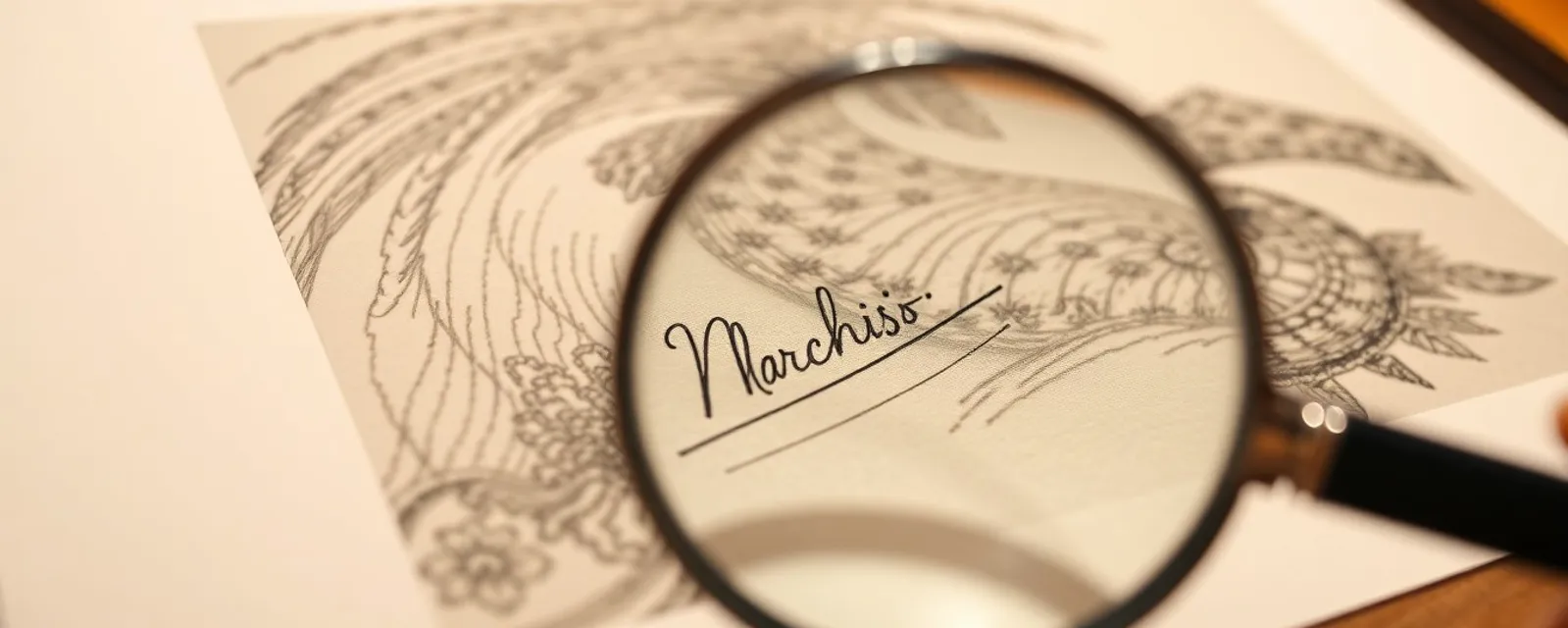
Buying a limited edition print is one of the most accessible ways to collect work by major contemporary artists. But it also carries risk. The secondary print market is rife with forgeries, misattributed editions, and condition issues that can turn a five-figure investment into a worthless piece of paper. This guide explains exactly what to check before you buy, drawing on the authentication methods we use at Hanga House to verify every work in our collection.
Why Authentication Matters
A limited edition print by Banksy, Kusama, or Hockney is only valuable if it is genuine. Unlike unique paintings where style, brushwork, and material analysis can reveal fakes, prints are mechanically reproduced by definition. The difference between an authentic signed edition and a reproduction can be invisible to the untrained eye. This makes authentication not just advisable but essential.
The consequences of buying an unverified print are severe. Auction houses will not accept works without provenance. Insurance companies may not cover them. And resale becomes effectively impossible. Authentication is not a luxury; it is the foundation of print collecting.
The Seven Key Checks
1. Certificate of Authenticity
Every legitimate limited edition print should come with a certificate of authenticity (COA) issued by the publisher, the artist's estate, or a recognised authentication body. For Banksy, this means a Pest Control certificate with the unique torn-banknote matching system. For Kusama, Abe Publishing catalogue references. For Warhol, the Andy Warhol Foundation catalogue raisonne. A print without a COA should be treated with extreme caution. At Hanga House, we verify every certificate against the issuing body's records before listing.
2. Edition Number and Pencil Signature
Authentic prints carry an edition number (e.g., 42/150) and typically a pencil signature by the artist in the lower margin. Check that the edition number format matches the publisher's known conventions. Some artists sign in different locations or use different marking systems. Hockney, for example, has used both pencil and printed signatures depending on the series and period. Be aware that some prints are issued as unsigned editions at lower price points, and these are still legitimate if properly documented.
3. Paper Stock and Printing Technique
The physical substrate tells a story. Authentic prints are produced on specific paper stocks chosen by the artist and publisher. Kusama prints typically use Japanese washi or Arches paper. Hirst's spot prints use specific weight and finish Somerset papers. If the paper feels wrong, it probably is. Under magnification, the printing technique should be consistent with the stated medium. A screenprint will show distinct ink layers; a lithograph will have a characteristic stone-grain texture; a giclée will show fine inkjet dot patterns.
4. Publisher and Printer Marks
Many prints carry blind stamps, chop marks, or printer credits that identify the publishing house. These marks are often embossed into the paper and difficult to forge convincingly. For example, Banksy prints authenticated by Pest Control carry a specific ink stamp. Murakami editions from Kaikai Kiki include distinct publisher marks. Knowing what marks to expect for each artist is part of expert authentication.
5. Provenance Chain
Where has this print been since it was created? A complete provenance chain traces the work from the publisher through every subsequent owner to the current seller. Gaps in provenance are red flags. A print that appeared on the market without explanation, or one offered by a seller who cannot explain how they acquired it, warrants extra scrutiny. Reputable dealers and auction houses maintain detailed provenance records.
6. Catalogue Raisonne Cross-Reference
For most significant print artists, a catalogue raisonne exists, which is a comprehensive listing of every authenticated edition. Cross-referencing a print against the relevant catalogue raisonne confirms that the stated title, edition size, dimensions, and printing technique match published records. This is one of the most reliable authentication steps. If a print is not listed in the catalogue raisonne, it may be a later unauthorised reproduction or a misattributed work.
7. Expert Consultation
For artists with known forgery issues, especially Banksy, Warhol, Haring, and Basquiat, consulting a specialist authenticator is essential. These experts have handled hundreds or thousands of works and can identify subtle inconsistencies that general dealers might miss. At Hanga House, we maintain relationships with specialist authenticators and consult them for every work where forgery risk exists.
Red Flags to Watch For
Several warning signs should prompt immediate caution. Prices significantly below market value suggest the work is not genuine. A seller who resists providing provenance documentation or a condition report is hiding something. Prints offered in bulk lots or from unnamed sources carry elevated risk. Online listings with low-resolution photographs that prevent detailed examination should be avoided.
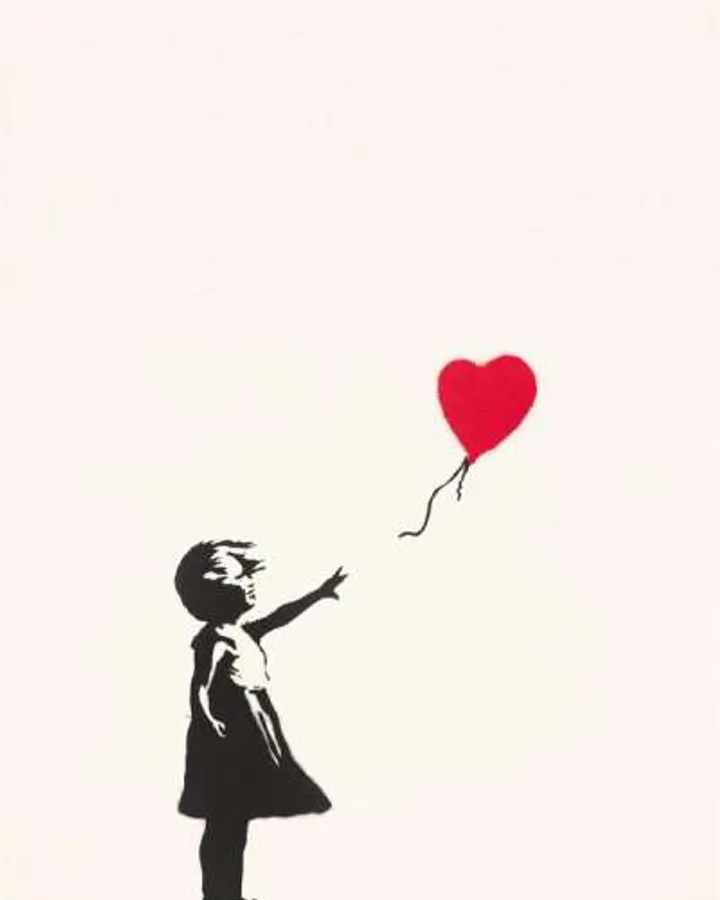
Be especially cautious of prints offered on online marketplaces by non-specialist sellers. The most common forgeries target the most commercially popular works: Banksy's Girl with Balloon, Kusama's pumpkins, and Warhol's Marilyn series. These are also the works most frequently offered without adequate authentication.
Condition Assessment
Authentication and condition are closely linked. A print's condition directly affects its value and can also provide authentication clues. Key condition factors include foxing (brown spots from fungal growth on paper), light damage or fading, creasing or handling marks, trimmed margins, restoration or inpainting, and frame damage. A professional condition report should document all of these factors with precise measurements and photographic evidence.
At Hanga House, every print receives a detailed condition report before listing. We examine works under controlled lighting using raking light to reveal surface irregularities, UV light to detect restoration, and magnification to assess printing quality. This report is shared with buyers before any commitment is required.
The Cost of Getting It Wrong
A fake Banksy print purchased for 20,000 GBP is worth nothing. An unsigned Kusama print misrepresented as signed loses 60 to 80 percent of its value. A print with undisclosed restoration may be worth half its stated price. These are not theoretical risks; they are realities that collectors encounter regularly in the secondary market.
Professional authentication costs between 100 and 500 GBP depending on the artist and the complexity of the verification. This is a trivial expense relative to the value of the work and the cost of being wrong. Never skip authentication to save a few hundred pounds on a five-figure purchase.
Our Authentication Process at Hanga House
Every work listed on Hanga House passes through our seven-step authentication process. We research the provenance chain, verify certificates against issuing body records, physically inspect the work under controlled lighting, check edition numbers against published catalogues raisonnes, consult specialist authenticators where needed, cross-reference recent auction and private sale data to confirm market positioning, and require a senior team member to sign off before listing.
Works that fail any step are declined. We have turned down prints that passed initial inspection but failed provenance verification, and works with genuine signatures but undisclosed condition issues. Our reputation depends on the integrity of every work we list.
If you are considering a print purchase, whether from Hanga House or elsewhere, we encourage you to use this checklist as your baseline. Authentication is not about suspicion; it is about diligence and respect for the work.