Print techniques
How a print was made changes how it looks and how it’s valued. Pick a technique to see what it involves and the prints we list in it.
Screenprints
157 prints in the catalogue

Screenprinting, also called serigraphy, pushes ink through a fine mesh stencil onto paper, one colour and one screen at a time. Each layer lies flat, so the image builds up in hard edges and solid colour.
Shown: Peter Blake, Sources of Pop Art V, 2007
Lithographs
69 prints in the catalogue
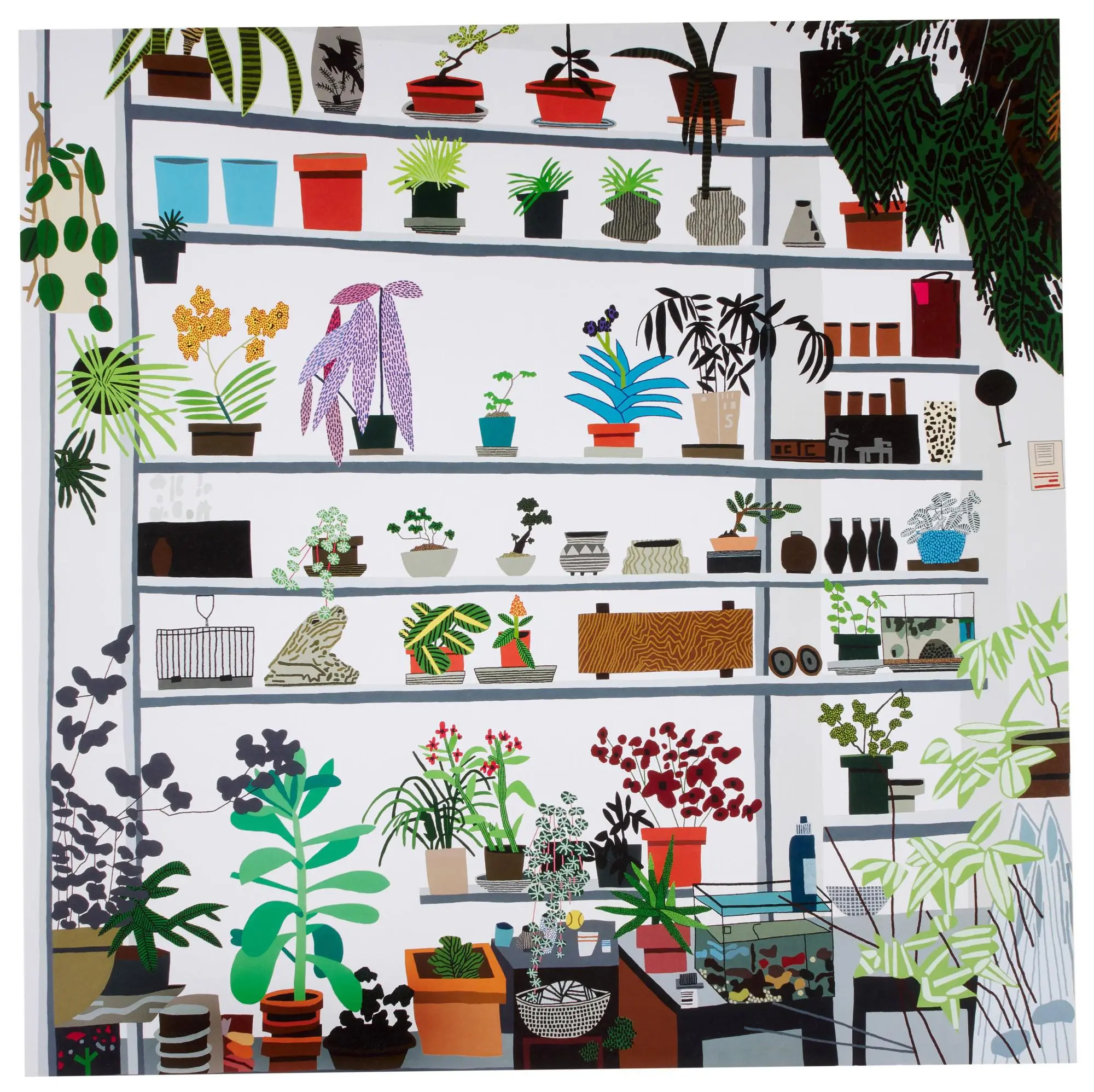
Lithography relies on grease and water repelling each other. The artist draws on stone or a metal plate with a greasy crayon or ink. When the surface is dampened and inked, the ink sticks only to the drawing.
Shown: Jonas Wood, Large Shelf Still Life, 2017
Etchings
35 prints in the catalogue
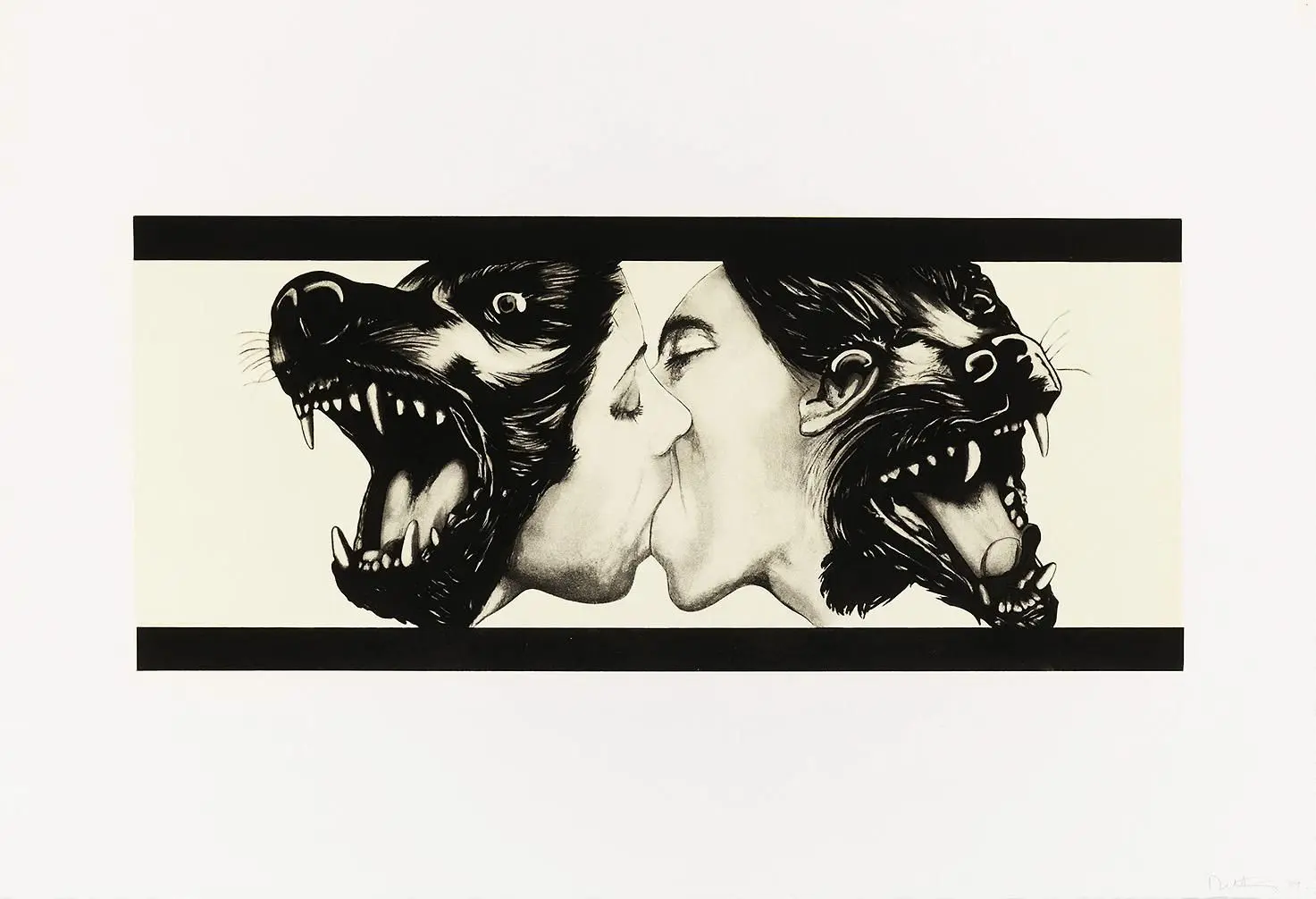
Etching is an intaglio process. The artist scratches an image through an acid-resistant ground on a metal plate, then bathes the plate in acid, which bites into the exposed lines. Ink is pressed into those lines and printed under heavy pressure.
Shown: Robert Longo, Strong in Love (Light Yellow), 1989
Woodcuts
6 prints in the catalogue
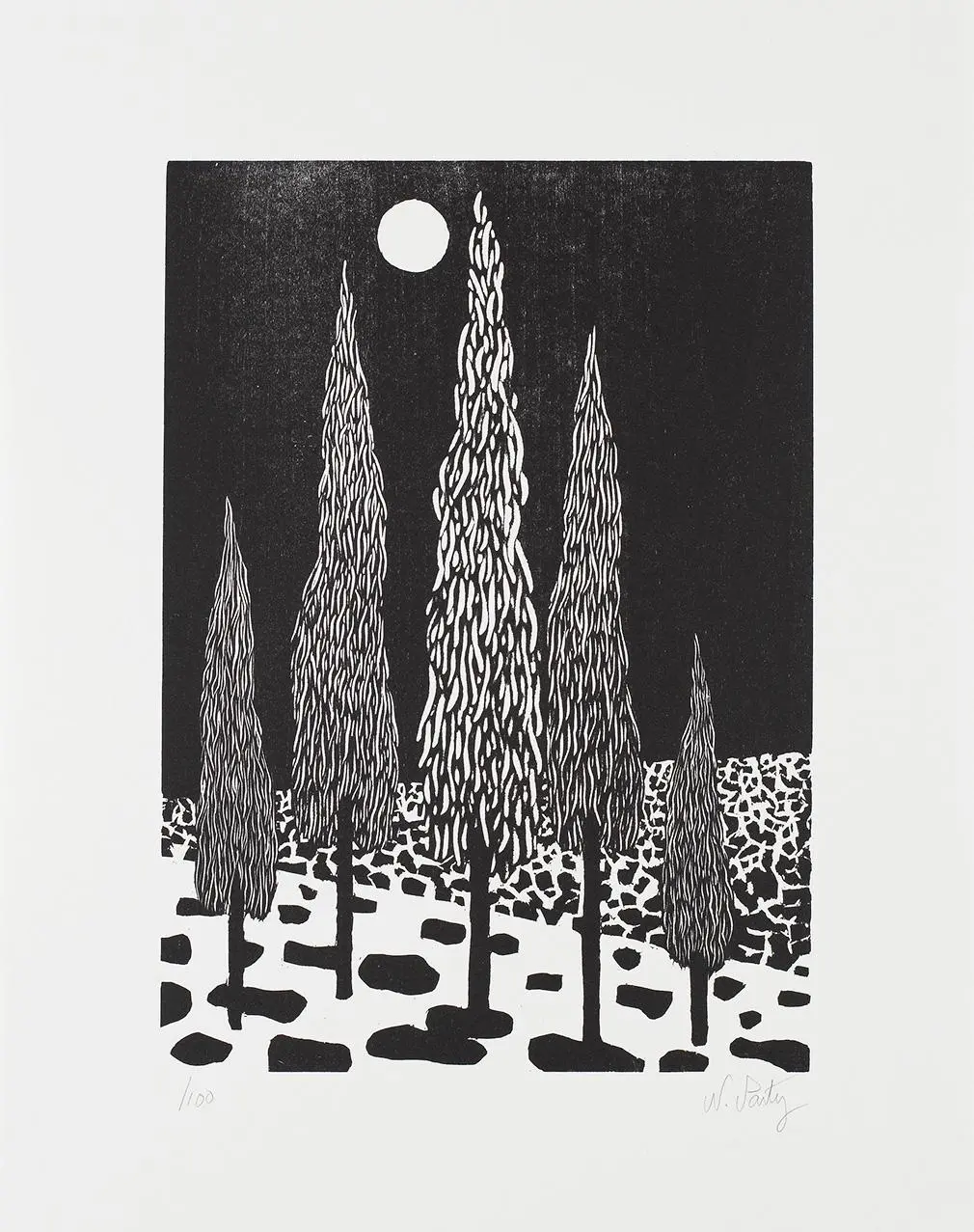
Woodcut is one of the oldest print techniques. The artist carves away everything that shouldn’t print, leaving the image raised on the block, which is then inked and pressed onto paper.
Shown: Nicolas Party, Trees, 2020
Giclées
10 prints in the catalogue
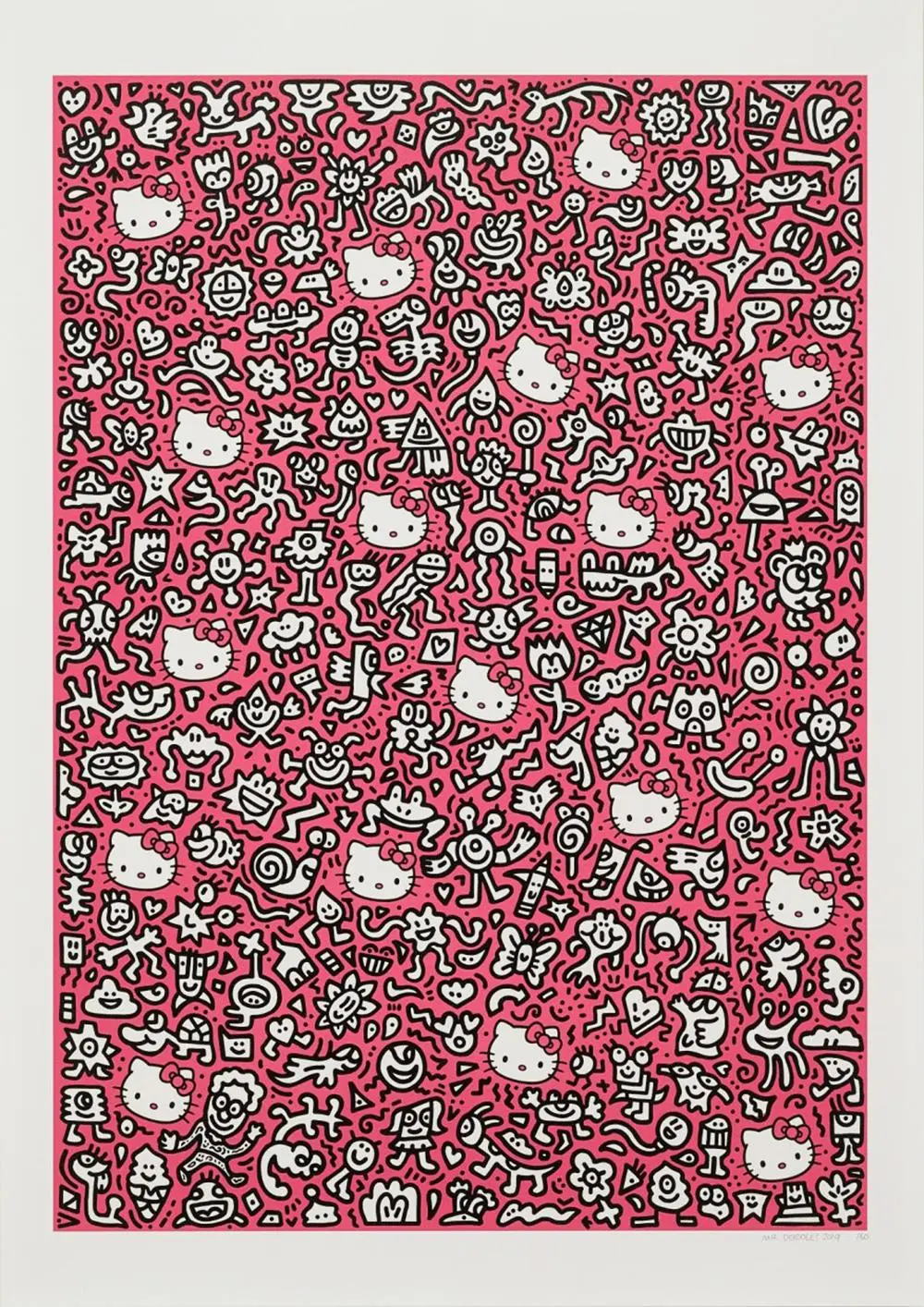
A giclée is printed with archival pigment inks on a high-resolution inkjet printer, onto fine art paper or canvas. Colour follows the original file closely, across a wide range of tones.
Shown: Mr Doodle, Pink Kitty, 2019
We don’t list any offset prints at the moment.
If you don’t know how a print was made, browse them all instead.
See all prints